
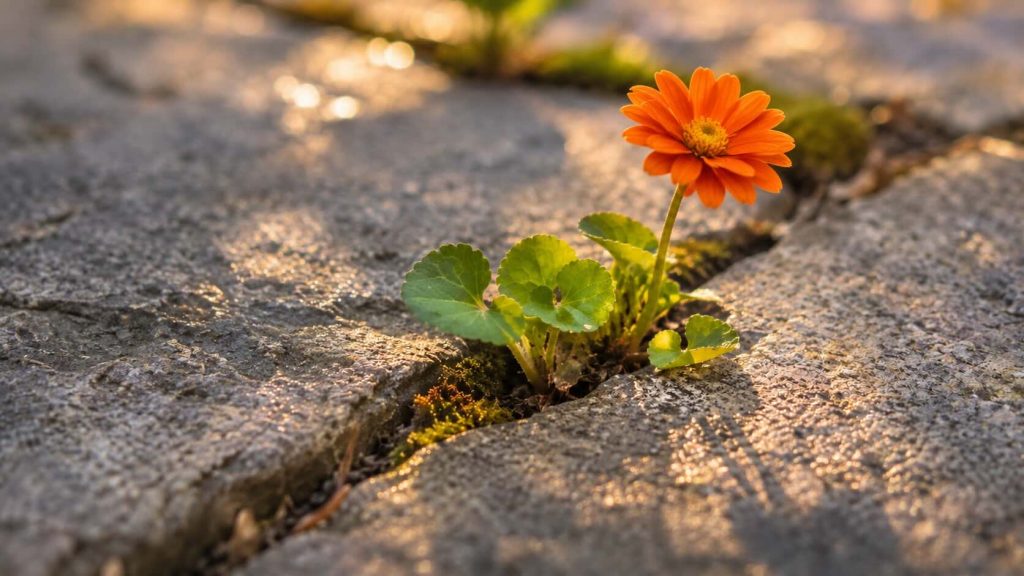
We usually know what to say when someone asks us what we’re thankful for. Family. Friends. Health. Provision. Answered prayers. Opportunities. The blessings we can see and celebrate.
But what about the blessings that don’t look like blessings?
The interruption that changed our plans, a correction we didn’t want to hear, the season when nothing seemed to be happening, or the door that closed just as we were ready to walk through it.
Sometimes gratitude is easy because God’s goodness is obvious. Other times, gratitude requires us to look beyond our circumstances and remember who God is.
Give Thanks “In” Everything
1 Thessalonians 5:18 says, “Give thanks in everything; for this is God’s will for you in Christ Jesus.” (CSB)
Notice that Paul says to give thanks in everything—not necessarily for everything.
We aren’t required to celebrate suffering, wrongdoing, or loss. But we can recognize God’s presence and faithfulness even in circumstances we wouldn’t have chosen.
Gratitude doesn’t mean everything is good. It means we can recognize God’s goodness in the midst of everything.
And sometimes the places we least expect to find gratitude become the very places where our faith grows deeper.
1. In Closed Doors
We tend to thank God for open doors, but closed doors can be opportunities to trust His wisdom.
In Acts 16:6–10, Paul and his companions were prevented from traveling into certain regions to preach the gospel. Their intentions were good, yet their plans changed.
Eventually, they discerned God’s direction toward Macedonia.
Not every closed door is a divine message, and we shouldn’t assume that every disappointment means God has something better waiting around the corner.
But we can trust that God’s purposes are not limited by our plans.
Sometimes a closed door doesn’t reveal where God is taking us. It reveals whether we trust Him when we don’t know.
2. In Interruptions
Have you ever had a perfectly planned day completely derailed? An unexpected phone call. Someone needing help. A problem demanding attention.
Interruptions can feel like obstacles to accomplishing what matters.
But sometimes they become opportunities to love someone, demonstrate patience, or recognize that our schedules are not the center of the universe.
Jesus frequently encountered people who interrupted His movements and plans. In Mark 5, while traveling to Jairus’s home, He stopped to respond to a woman who had been suffering for twelve years.
What looked like an interruption became an occasion for compassion and healing. Not every interruption is a divine appointment, but some deserve more than our irritation. Sometimes what interrupts our plans becomes an opportunity to reflect God’s heart.
3. In Waiting
Waiting is rarely at the top of our gratitude lists. We want answers. Progress. Resolution. Movement. But waiting exposes how much we want to control the timing of our lives.
Psalm 27:14 encourages us to wait for the Lord and be strong and courageous. Waiting isn’t necessarily inactivity. It can be a season of faithful obedience while we trust God with what remains unresolved.
And although waiting doesn’t guarantee the outcome we want, it can deepen our dependence on the One who sustains us. Waiting may not change our circumstances as quickly as we’d like, but it can change the way we depend on God.
4. In Weakness
We don’t usually celebrate our limitations. We’d rather be capable, confident, and strong. Recently, we looked at how Paul discovered something remarkable through his thorn in the flesh. After pleading with the Lord three times for its removal, he received this answer: “My grace is sufficient for you, for my power is perfected in weakness.” (2 Corinthians 12:9, CSB)
Paul learned that weakness did not disqualify him from experiencing God’s power. Instead, it became an occasion to depend upon Christ. Our weakness doesn’t diminish God’s strength. It gives us another reason to depend upon it.
5. In Ordinary Moments
Sometimes we’re so busy looking for extraordinary blessings that we overlook the grace woven into ordinary life. A quiet morning. A familiar voice. A shared meal. A moment of laughter. The ability to begin again.
James 1:17 reminds us that every good and perfect gift comes from above.
We don’t have to wait for something spectacular to recognize God’s generosity. Sometimes gratitude begins when we stop treating everyday mercies as ordinary entitlements. What we call ordinary may be extraordinary evidence of God’s daily provision.
6. In Unanswered Questions
We like explanations. We want to know why something happened, why a prayer remains unanswered, or why a situation unfolded differently than expected. But God hasn’t promised to explain everything.
Deuteronomy 29:29 reminds us that the secret things belong to the Lord, while what He has revealed belongs to us.
There is humility in acknowledging what we don’t know. And there is peace in remembering that God’s wisdom is not limited by our understanding. We don’t have to know everything God is doing to trust what He has revealed about Himself.
7. In Small Beginnings
We often celebrate the finished product but overlook the humble beginning. The first step toward healing…the first page of a manuscript…the first attempt at reconciliation…the first act of obedience after a season of hesitation.
Zechariah 4:10 warns against despising the day of small things.
In its context, the passage encouraged God’s people concerning the rebuilding of the temple, but it also reminds us not to evaluate God’s work merely by outward appearances.
Small beginnings can require great faith. Don’t despise what is small simply because you cannot yet see what it may become.
8. In Limitations
Sometimes our limitations are frustrating because they remind us that we cannot do everything. We have limited time, energy, resources, and capacity. But limitations can also help us recognize our dependence on God and our need for wise stewardship.
Psalm 90:12 asks God to teach us to number our days carefully so that we may develop wisdom in our hearts. Recognizing our limits can help us establish priorities, practice rest, and focus on what God has actually entrusted to us.
We aren’t called to do everything. We are called to be faithful. Sometimes our limitations remind us that faithfulness matters more than doing it all.
9. In Lessons Learned the Hard Way
Some of our most valuable lessons come through experiences we wouldn’t choose to repeat.
Hebrews 12:11 reminds us that discipline is painful in the moment but can produce the peaceful fruit of righteousness.
We don’t need to celebrate our mistakes or the pain they caused. But we can be grateful for God’s mercy in teaching us through them. The lesson may have been costly, but God’s grace can keep the cost from being wasted.
10. In What Hasn’t Changed Yet
Perhaps one of the most unexpected places to find gratitude is in a circumstance that remains exactly as it was.
But God is still faithful when our prayers seem unanswered and our circumstances remain unchanged.
Habakkuk 3:17–19 describes a devastating picture of agricultural failure and loss. Yet the prophet declares that he will rejoice in the Lord and find strength in the God of his salvation.
His circumstances had not improved. But his confidence rested in God’s character. This is not denial. It is worship. Gratitude isn’t always thanking God because something changed. Sometimes it’s thanking Him because He hasn’t.
Gratitude Changes What We Notice
The more we practice gratitude, the more we begin noticing things we previously overlooked. We recognize grace in an interruption. Wisdom in a limitation. Faithfulness in a season of waiting. Provision in ordinary moments. Strength in weakness. And hope when circumstances haven’t changed.
This doesn’t mean every hard thing is secretly good. It means God remains good, and His presence is not limited to the places where life feels easy.
Romans 8:28 reminds us that God works all things together for the good of those who love Him and are called according to His purpose.
We may not understand every circumstance, but we can trust the One who is at work within them. Gratitude doesn’t change every circumstance. It changes what we recognize about God within our circumstances.
Mindset Reset
This week, instead of asking only, “What blessings has God given me?”
Try asking: “Where might I be overlooking His goodness?”
Perhaps it’s in a season of waiting or a small beginning.
Or maybe in an ordinary moment you nearly missed. You don’t have to manufacture gratitude for something painful.
Simply ask God to open your eyes to His presence and faithfulness in the midst of it.
You may discover that some of your most meaningful reasons for gratitude were hiding in places you never thought to look.
Sometimes gratitude isn’t about finding more blessings. It’s about recognizing the ones we’ve been walking past.
Prayer
Father, thank You for Your goodness in both the extraordinary and ordinary moments of my life. Forgive me for the times I’ve overlooked Your faithfulness because my circumstances didn’t look the way I wanted. Open my eyes to recognize Your grace in unexpected places. Help me trust You in waiting, depend on You in weakness, remain faithful in limitations, and recognize Your provision in everyday moments. Give me discernment not to call evil good, but to recognize that Your goodness remains even when life is difficult. Teach me to live with a grateful heart, not merely because of what You give, but because of who You are. In Jesus’ name, Amen.
Check out the Shame Rx blog post this week: You Don’t Have to Feel Grateful All the Time